Method and raw data
This GitHub repository contains the test methods, data sets, client versions, and raw data. The following benchmarks are available in this notebook.Benchmarks
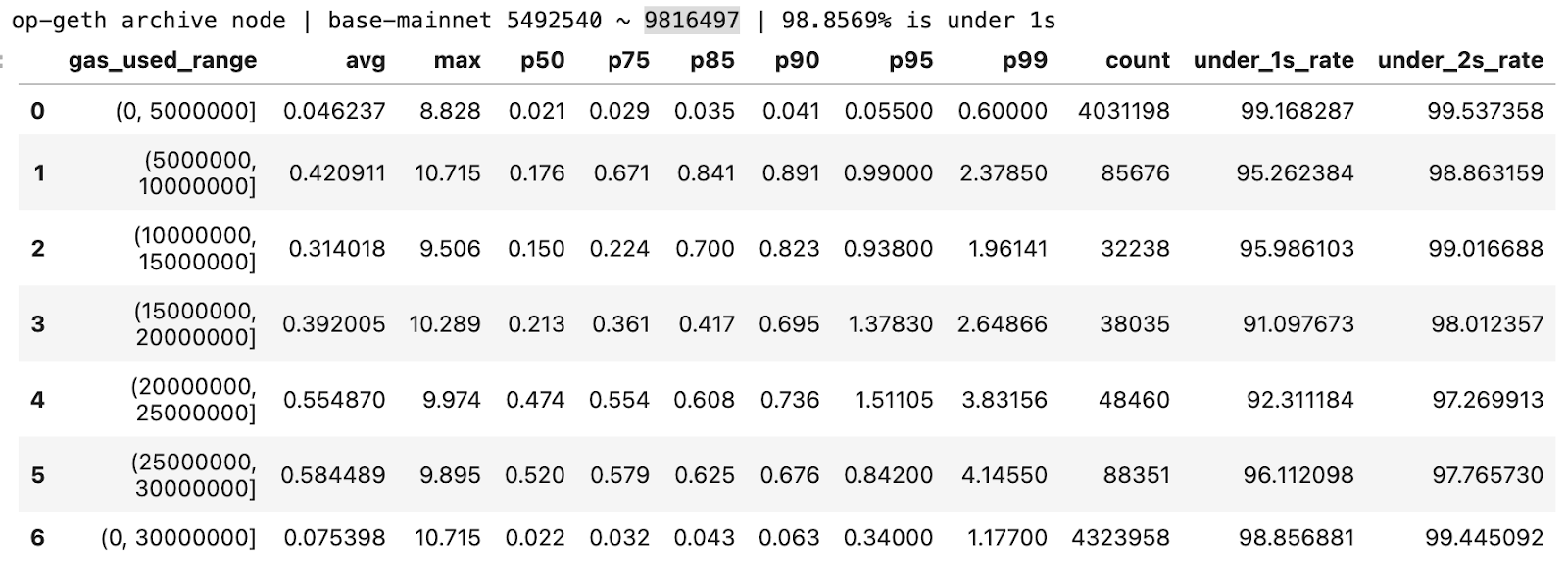
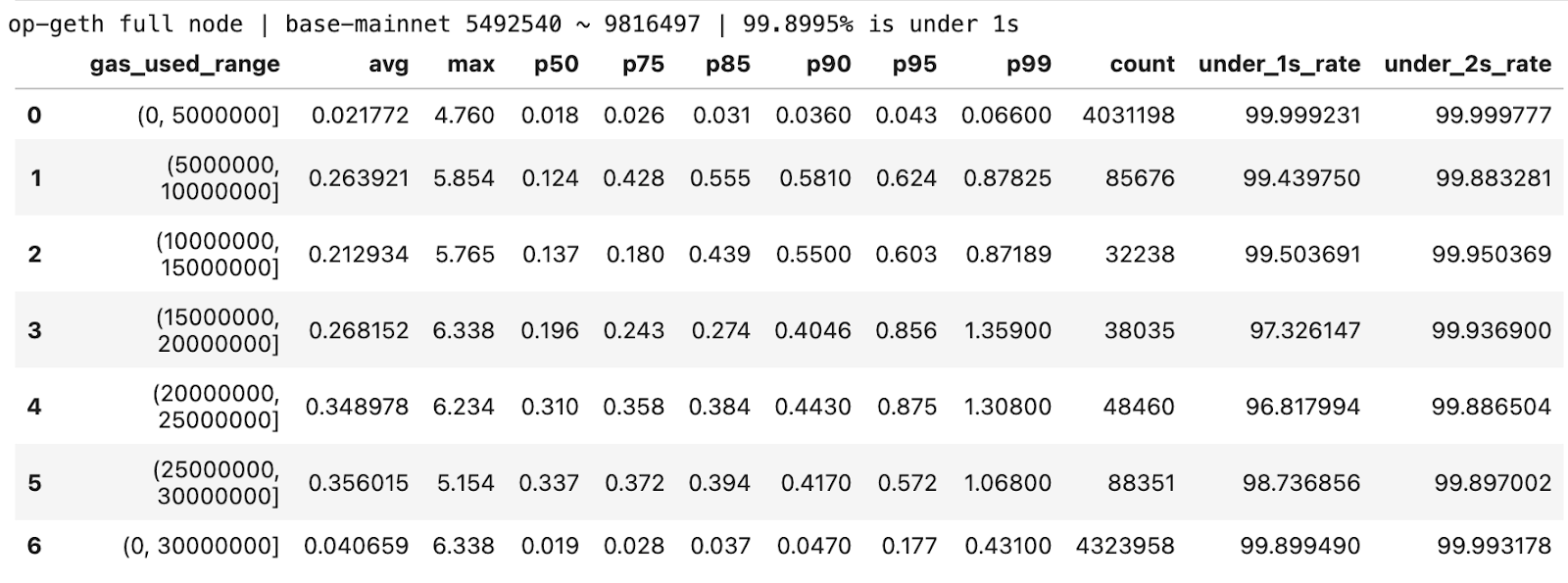
Figures 1 and 2 show the Base nodes’ block-building time distribution with op-geth archive node & full node from block 5492540 to 9816497. We can see that the average block building time takes 0.58 and 0.36 seconds each for blocks that spent 25M ~ 30M gas, which is less than one second.
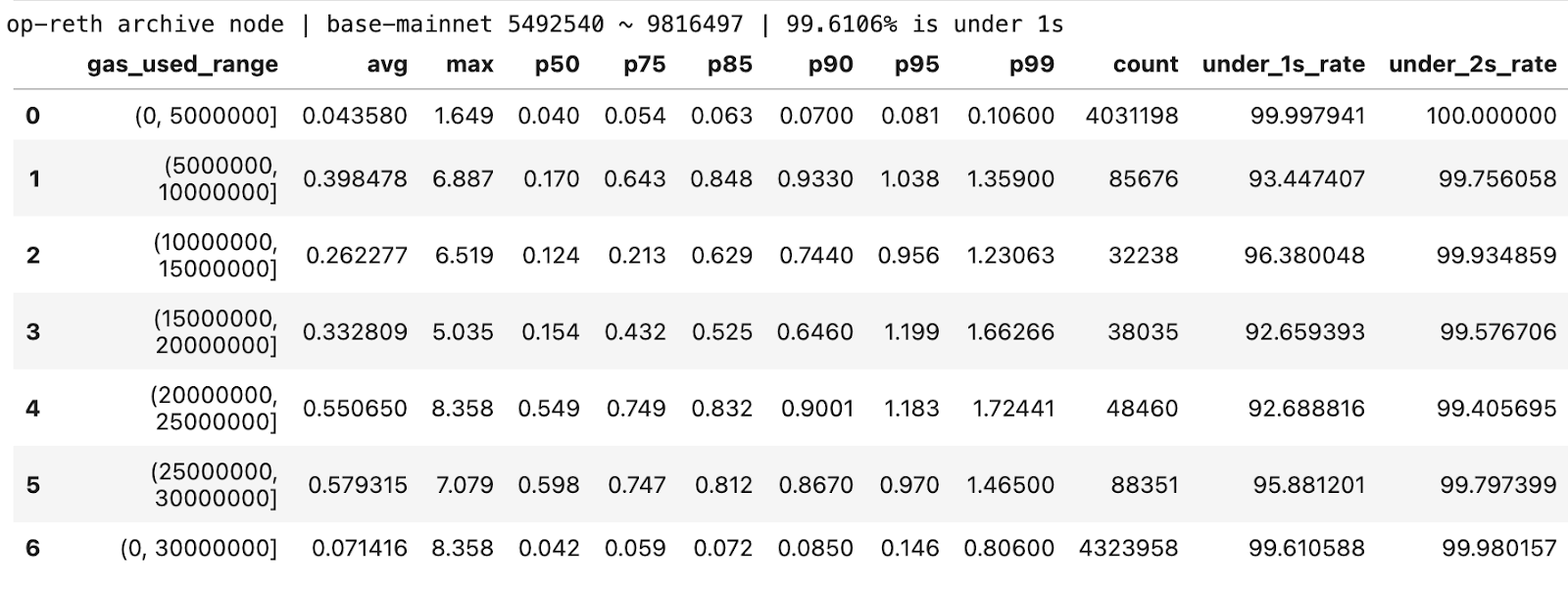
Figure 3 shows the Base nodes’ block-building time distribution using the op-reth archive node from block 5492540 to 9816497. Compared to op-geth’s archive node, we can see that op-reth shows a better performance in all ranges.
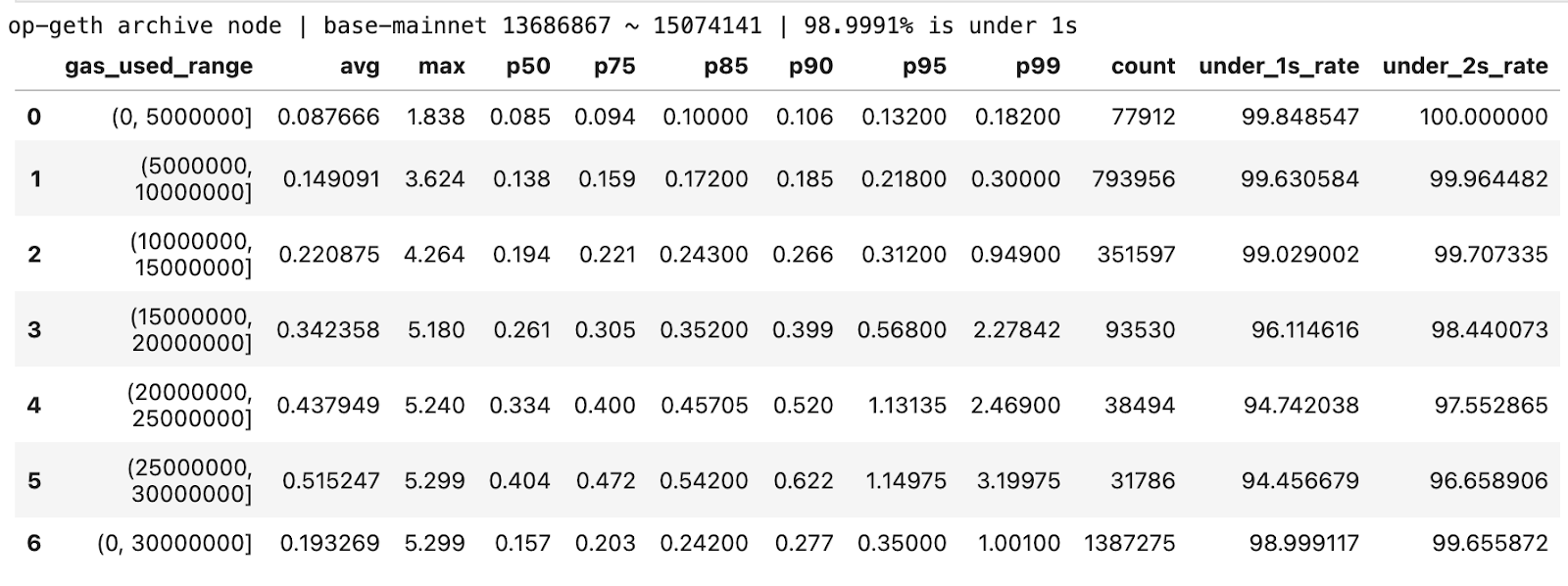
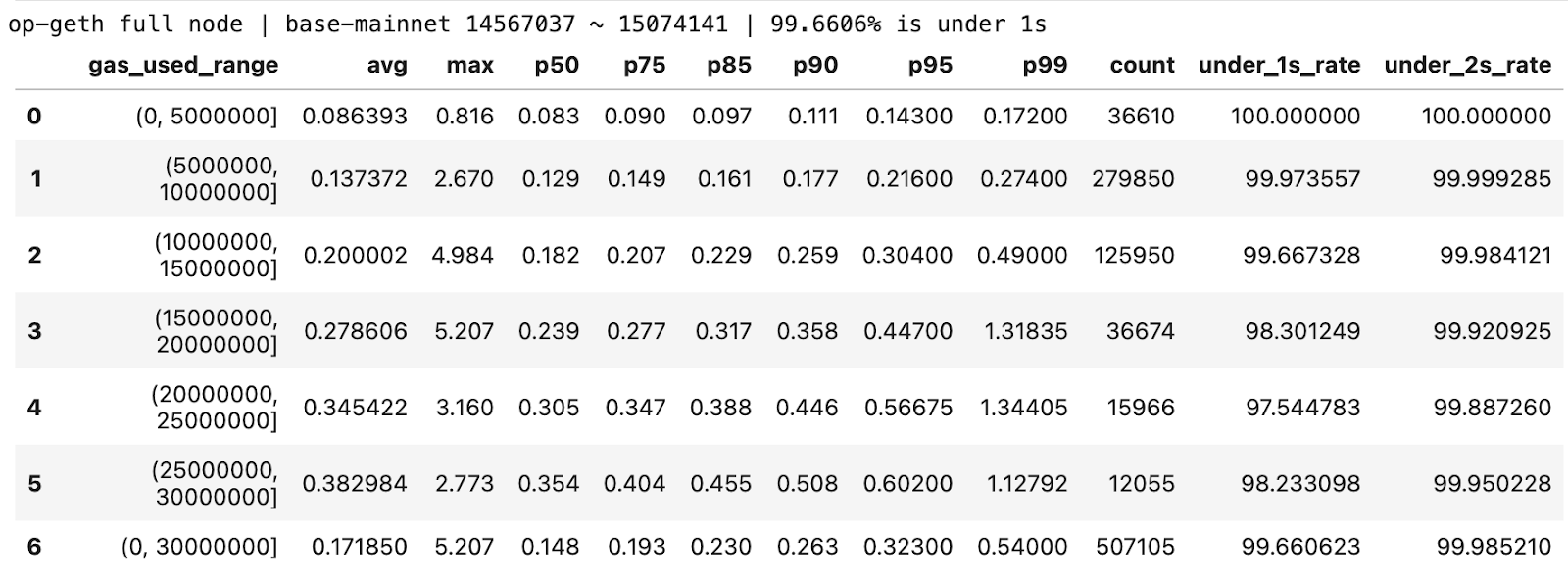
Throughout the research, we found that the node meaningfully takes longer to build a block as the chain stores more states and transactions to access more historical data. Therefore, we benchmarked the latest blocks in Figures 4 and 5. On average, both the full node and archive node could build a congested block on time. It is worth noting that the average block-building time of high gas spending range is similar to the older blocks, but the average block-building time is higher on the newer blocks.
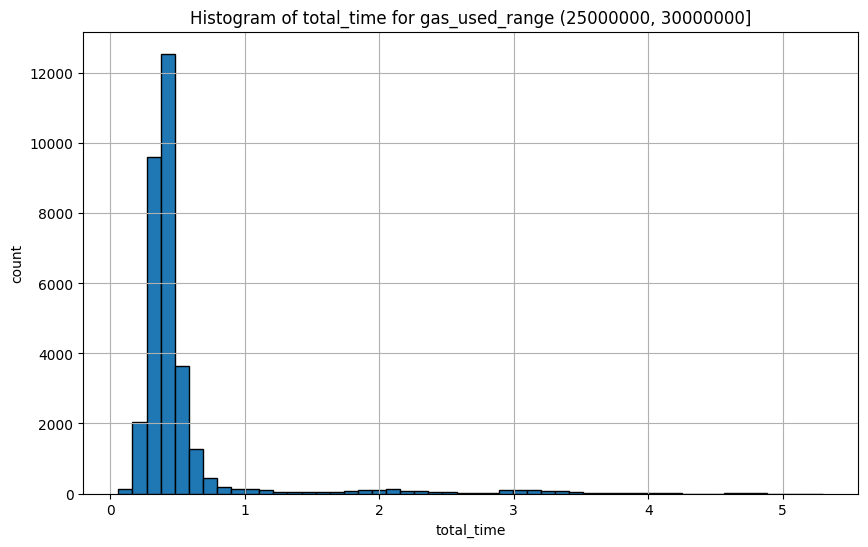
If we zoom in on the 25m~30m gas range of the archive node, the average could be potentially concerning–0.51 sec. It is worth noting that we can see the average is diverged from p50 (0.4 sec) because of outliers in the histogram (Figure 6), and p50 is a more important metric than the average for the block progression (Sequencer) because of its asynchronous nature.
When the sequencer seals the block after the block time, it stops to include the transactions and yields the current processing transactions to the next block. Therefore, the sequencer can include most transactions that took less than one second in the block on time and include outliers in the next block. Therefore, we can expect the system to be able to build blocks in one second in most cases, even in the highest gas range (25m~30m gas).
As a result, we can learn that nodes can build the latest blocks of Base Mainnet with the highest level of production loads in one second with an i3en.3xlarge instance (or similar specs).
Expected impacts
Verifier
- Sync from genesis: If OP Chains’ block time drops to one second, verifiers may need longer to sync the chain from the genesis with L1 derivation. However, we expect it won’t be a notable issue for verifiers as OP Stack supports the engine sync.
- Following the tip: The research suggests that verifiers are less likely to have a problem following the tip because nodes could build a block under one second at the highest gas range, especially since most verifiers are full nodes.
Sequencer
- Block progression: As the previous paragraph mentioned, the data suggests we don’t expect problems on a shorter block time.